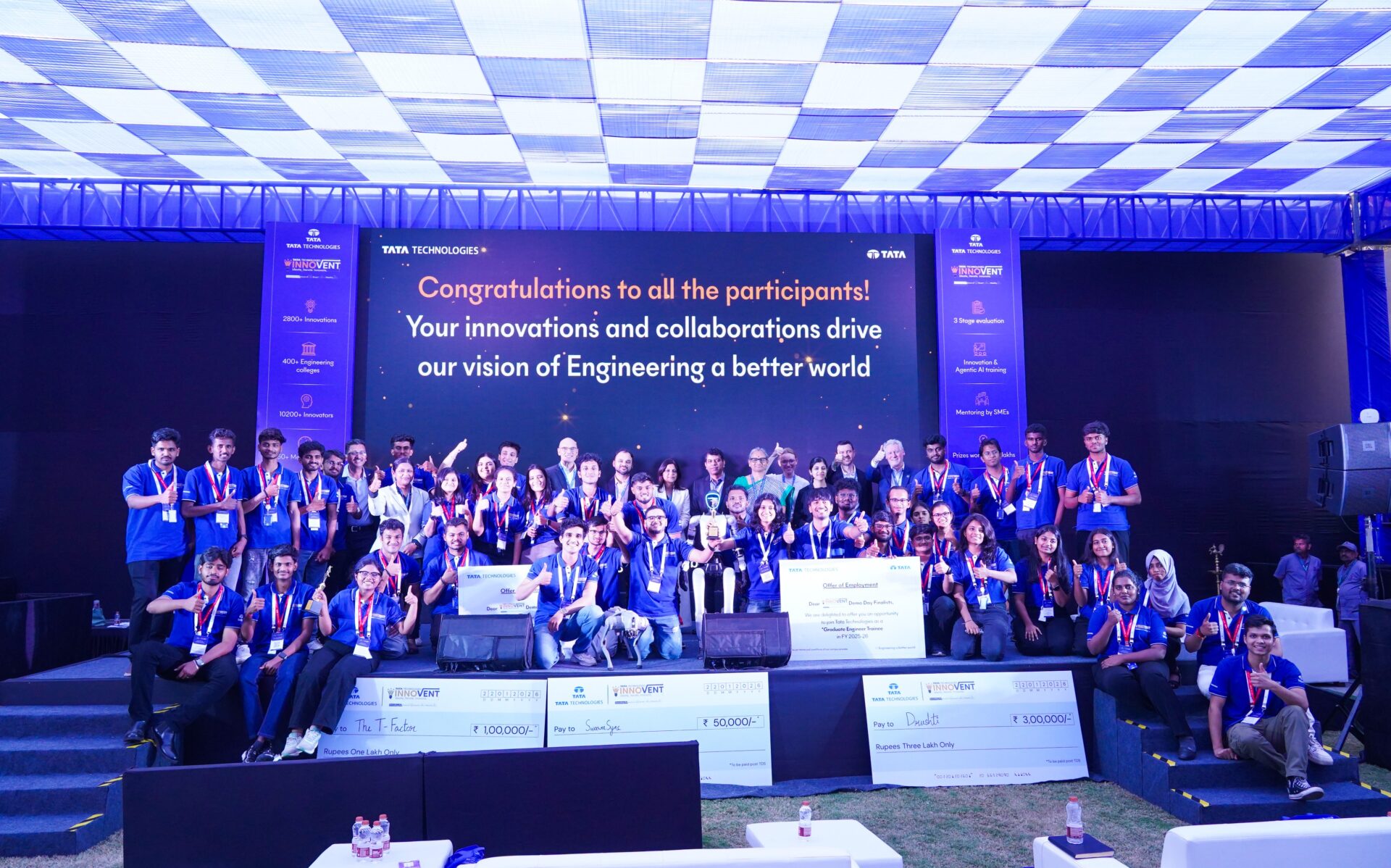
TATA TECHNOLOGIES INNOVENT 2026
Innovations for a better world
The 3rd edition of the Tata Technologies InnoVent Hackathon was launched in 2025. It received 2,822 entries from 10,247 participants across 404 institutions, all focused on the theme Innovating the Future of Smart Mobility: Powered by Intelligence, Engineered for 2030. The grand finale at our Hinjewadi HQ featured the top 10 teams presenting their innovative solutions to a distinguished panel of judges
#ComeJoinUs in #EngineeringABetterWorld
/ Project registration – 24th Jun ’25 – 30th Jul ’25
/ Virtual POC presentation – Oct ’25
/ Final demo day – Jan ’26
Prizes
1st Prize – INR 300,000**
2nd Prize – INR 100,000**
3rd Prize – INR 50,000**
Paid internship opportunities for all top teams
**Terms and conditions apply. All cash prizes are subject to applicable tax deductions at source.
Winners of InnoVent 2026
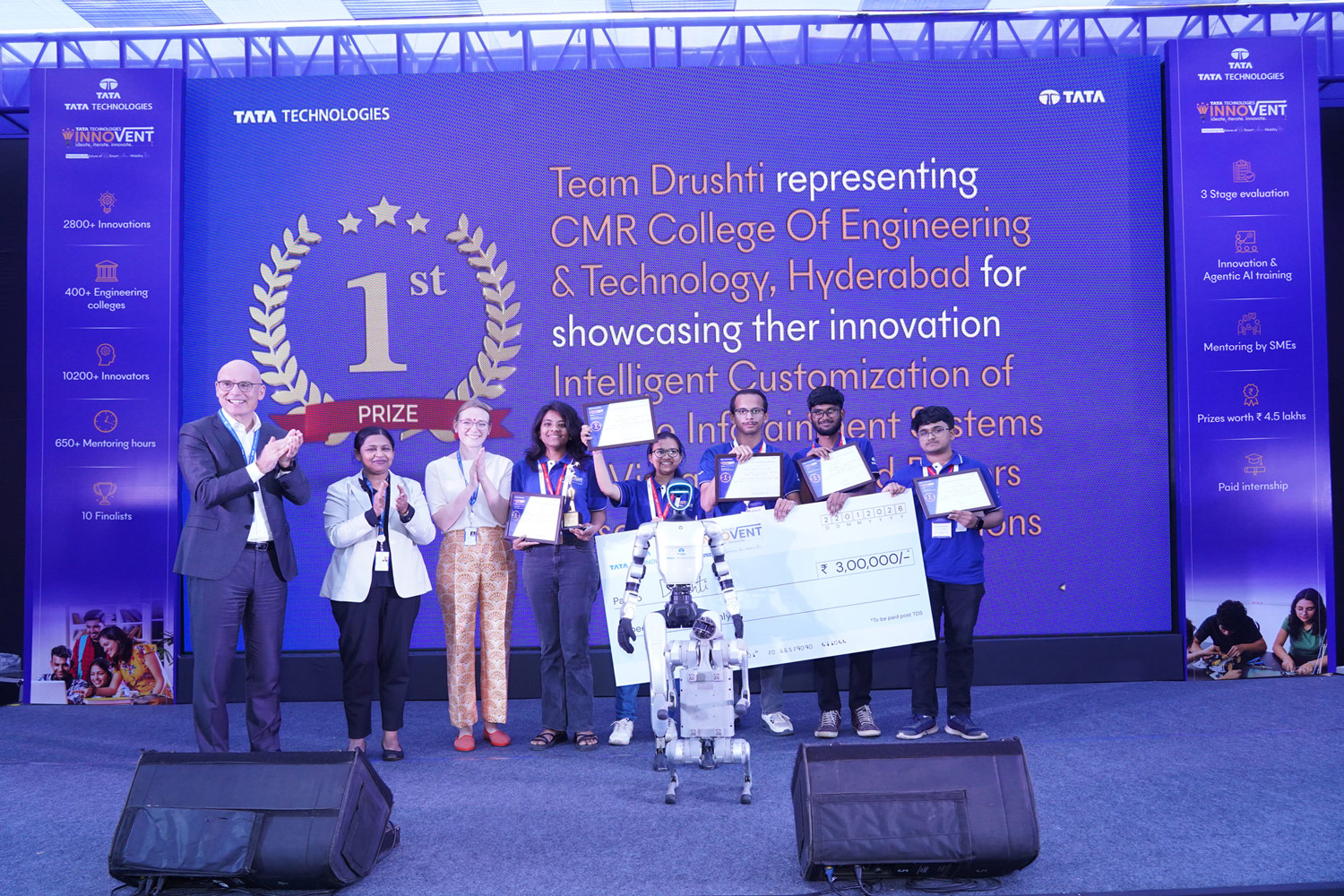
Winner 1: Team Drushti
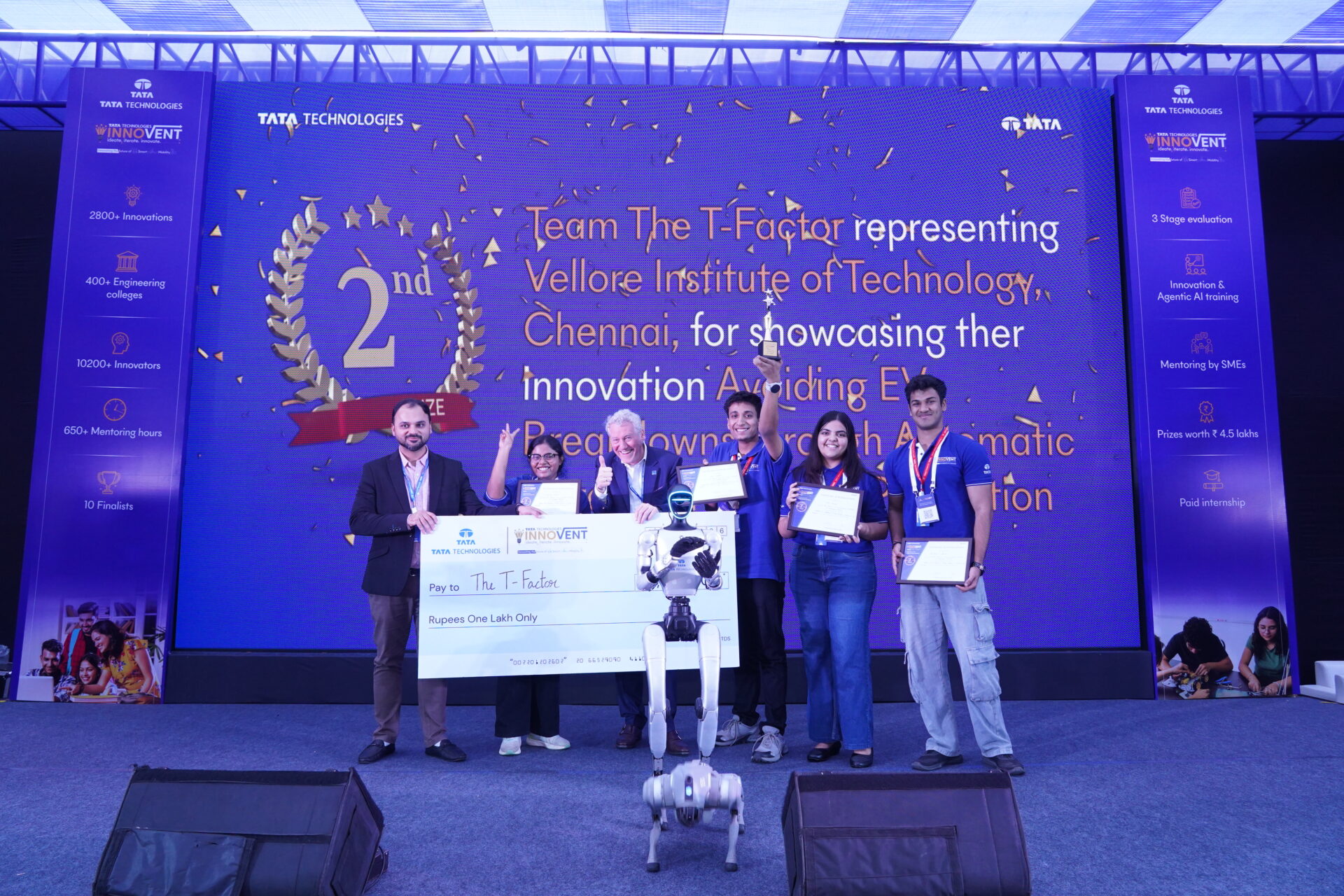
Winner 2: Team The T-Factor
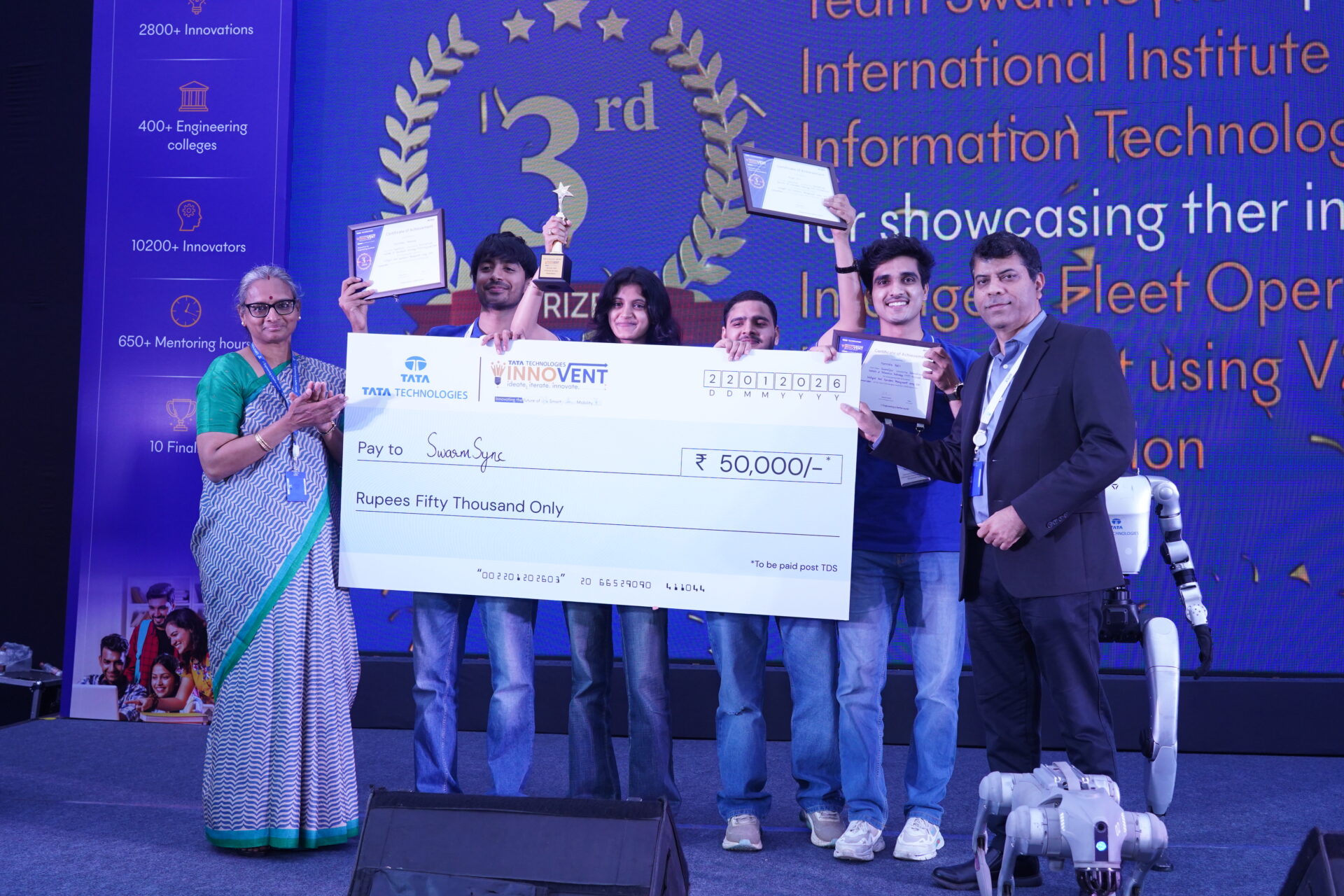
Winner 3: Team SwarmSync
Top 10 projects of InnoVent 2026

Team Drushti
Read more
Team Drushti
Problem statement: Modern vehicle dashboards use fixed, generic layouts that assume uniform vision, leaving drivers with cataracts, color vision issues, glare sensitivity, tunnel vision, or age‑related loss, unable to clearly see critical information. Current accessibility features like zoom, contrast modes, or voice support do not address these clinical vision conditions, increasing cognitive load and safety risks. No production vehicle today offers a dashboard that adapts dynamically to a driver’s visual capability or real‑time context. Existing solutions depend on static UIs with no integration of medical vision understanding or safety monitoring. The client requires a low‑latency, privacy‑aware adaptive interface that personalizes layout, visuals, and alerts in real time for modern digital cockpits and software‑defined vehicles
Solution: This project aims to create an intelligent, vision-adaptive driving dashboard that enhances visibility, comfort, and safety for all users. The system predicts the user’s visual needs using medical conditions of the driver, such as color blindness and cataract, and automatically adjusts brightness, contrast, glare reduction, and interface elements through an adaptive UI engine. It also learns from user preferences and usage patterns over time, offering a personalized and optimized driving experience.
Team The T-Factor
Read more
Team The T-Factor
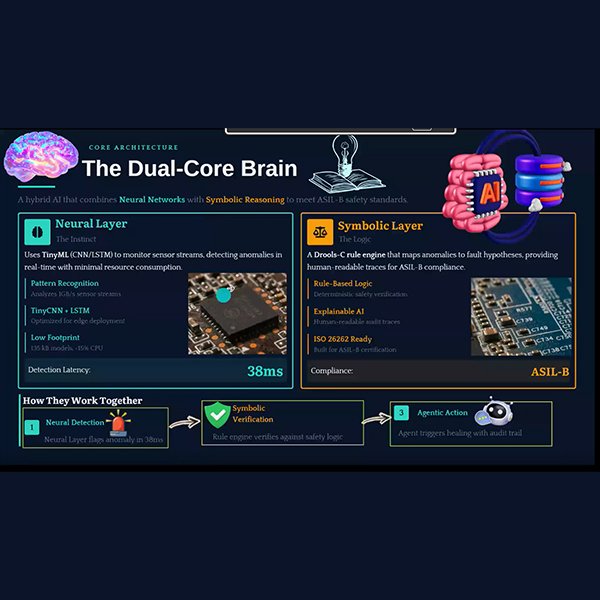
Problem Statement: Modern EVs function as highly complex “computers on wheels” with 100+ ECUs generating ~1 GB/s data, making electrical/software faults a leading cause of breakdowns (47%). Current cloud-based diagnostics are too slow (~5s latency), creating unsafe blind zones at highway speeds and making real-time decisions unreliable. Service centers struggle to localize intermittent “ghost” faults, driving long repair times and massive industry cost losses. Existing alternatives like hardware redundancy are expensive, while traditional on-board AI can drain battery range due to high power consumption. Therefore, EVs need a fast, low-power, on-vehicle fault detection and recovery solution that improves safety, reliability, and maintenance efficiency.
Solution: This project delivers an advanced on‑vehicle AI system that monitors EV health in real time, detects faults in 38 ms, and identifies root causes with 92% accuracy. Itself‑heals nearly 88% of issues, reducing breakdowns, downtime, and maintenance costs significantly. The solution works fully offline, ensuring reliability and data privacy even in remote regions. The team will upgrade AI models, expand testing across more vehicles, refine the health‑monitoring dashboard, and ensure ASIL‑B and WP.29 compliance. For demo day, the plan includes a hardware prototype, a 3D digital twin simulation, and a Zephyr‑based OS/app integrated with the vehicle.
Team SwarmSync
Read more
Team SwarmSync
Problem statement: Fleet operations in India face high downtime, safety risks, and inefficiencies because vehicles function in isolation and rely on slow, centralized monitoring systems. Drivers and vehicles lack real‑time hazard awareness, causing avoidable accidents and delays under unpredictable road conditions. Breakdowns disrupt operations further, as fleets have no coordinated mechanism for assistance or cargo redistribution. Existing navigation apps provide only traffic insights not fleet‑specific, vehicle‑to‑vehicle situational intelligence. There is a critical need for a cooperative, low‑latency communication system that enables fleets to function as an integrated, intelligent network.
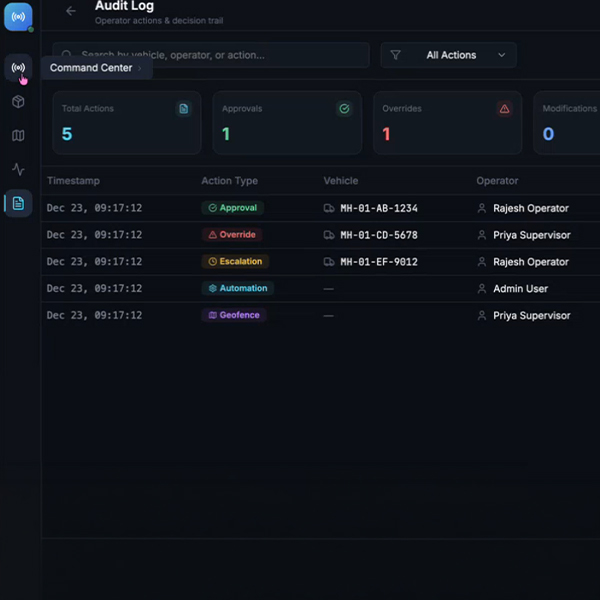
Solution: The project introduces a V2X‑powered fleet intelligence platform, SwarmSync, that transforms isolated vehicles into a collaborative, self‑optimizing swarm. Vehicles share live sensor and driver data through the cloud, enabling instant V2V hazard alerts, geofenced broadcasts, and coordinated roadside assistance. A cargo reallocation engine ensures operational continuity during vehicle breakdowns, while an operator dashboard provides real‑time fleet visibility. Together, these capabilities reduce downtime, improve safety, cut operating costs, and significantly enhance fleet efficiency under real Indian road conditions.
Team Jupitor07
Read more
Team Jupitor07
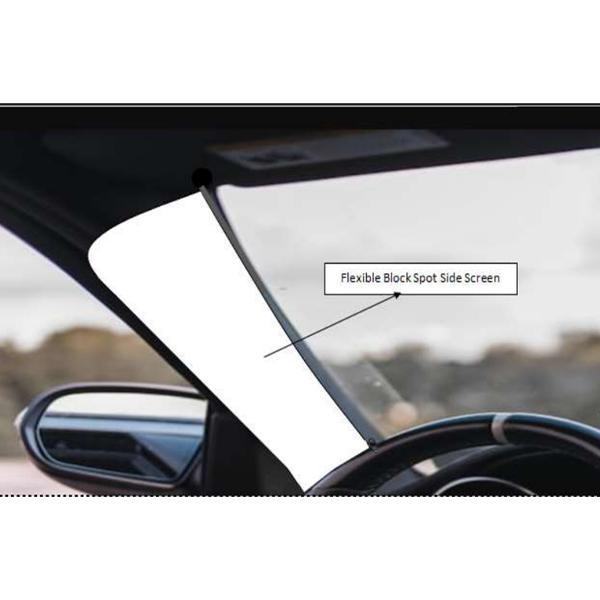
Problem statement: Blind-spot visibility and steering awareness in modern vehicles pose a serious safety risk. Modern cars are designed with thick A-pillars to meet safety and structural standards, but this design unintentionally creates permanent blind spots. These blind zones can completely hide pedestrians, cyclists, animals, and even other vehicles, especially during right and left turns at intersections or on curved roads.
Solution: Solution uses an external camera mounted on the A-pillar and an internal smart display to provide drivers with a real-time outside view. The display content adapts dynamically based on steering input and turn signals, ensuring relevant information during maneuvers. Designed as an affordable, retrofit-friendly solution. It improves situational awareness, reduces collision risk, and boosts overall driving confidence. This solution has been named as AVSAS (Advanced Vehicle Safety Assistance System).

Team Empty Road
Read more
Team Empty Road
Problem statement: India faces over appx 150,000 road deaths annually, while ADAS technologies helps but it fail in local conditions, with imported sensors, cloud latency, and non‑Indian AI models proving technically inadequate. Existing systems remain economically inaccessible, priced at appx ₹50,000–₹200,000 and unaffordable for 95% of vehicle owners. Proprietary ECUs, lack of retrofit options, and absence of localized standards further block adoption. This combination of technical mismatch, high costs, and structural industry gaps creates a systemic failure in delivering safety solutions. The result is a massive, preventable socioeconomic burden may exceed ₹45,000 crores each year.
Solution: The system delivers real-time perception and hazard detection, identifying threats such as potholes, stalled vehicles, driver drowsiness, and other obstacles on the road, while enabling predictive decision-making to help drivers react faster and more accurately than human reflexes. It is an advanced camera-based automotive safety solution developed using MATLAB and Simulink to address the unique challenges of Indian road environments. Designed as a cost-effective retrofit, the system operates entirely on-vehicle and ensures consistent performance across diverse lighting, weather, and traffic conditions. This innovative solution is branded as VITA – Vehicle Intelligence for Threat Anticipation.

Team En3rge
Read more
Team En3rge
Problem statement: Conventional Battery Management Systems (BMS) rely on instantaneous voltage readings and rule‑based estimation, which fail under real-world conditions such as varying loads, temperature changes, and battery aging. This leads to inaccurate State of Charge (SoC), sudden percentage drops, unreliable range prediction, poor fault detection, and inefficient battery usage. These issues affect EVs, robots, drones, renewable storage, fleets, and second‑life batteries—causing unexpected shutdowns, reduced lifespan, higher maintenance costs, and user mistrust. An intelligent, real-time, and adaptive monitoring solution is required to accurately estimate battery states, predict degradation, and provide early warnings to ensure safety, efficiency, and long-term reliability.
Solution: This project develops an AI-enabled Digital Twin for lithium-ion batteries, designed to deliver significantly more accurate State of Charge (SoC), State of Health (SoHo), and Time-to-Empty predictions than standard EV BMS units. The system integrates machine learning models, physics-based electrochemical simulations, and real-time Edge sensing on a Raspberry Pi. A web-based smart dashboard provides continuous monitoring, anomaly detection, and automated alerts. The solution enhances battery safety, reliability, and lifecycle performance for electric vehicles.
Team Grid Gurus
Read more
Team Grid Gurus
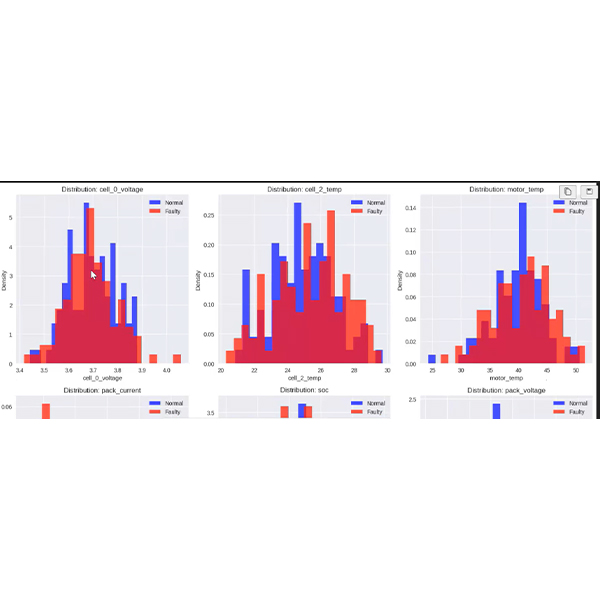
Problem statement: The rapid rise of EV adoption has increased dependence on lithium‑ion batteries, yet battery failures continue to cause breakdowns and safety incidents despite advancements in BMS technologies. Traditional threshold‑based BMS cannot detect early degradation, subtle faults, or fault propagation across cells and modules, leaving critical risks like thermal runaway unaddressed. Existing systems lack advanced modeling, automated root‑cause analysis, explainability, and fleet‑level learning, resulting in reactive maintenance, high downtime, and inconsistent diagnostics. Current practices are further strained by security threats, fast‑charging stress, and diverse climatic conditions that conventional monitoring cannot adapt to.
Solution: This project focuses on developing an AI-driven fault detection and self-healing system for electric vehicles using Graph Neural Networks (GNN). By continuously monitoring critical EV subsystems, detecting anomalies in real time, and leveraging digital twin simulations, the system enables predictive maintenance and OTA updates to reduce downtime and improve reliability. This reduces breakdowns, service time, and battery damage without requiring hardware changes. This solution is expected to achieve 97% accuracy across critical EV subsystems.
Team Techtronix
Read more
Team Techtronix
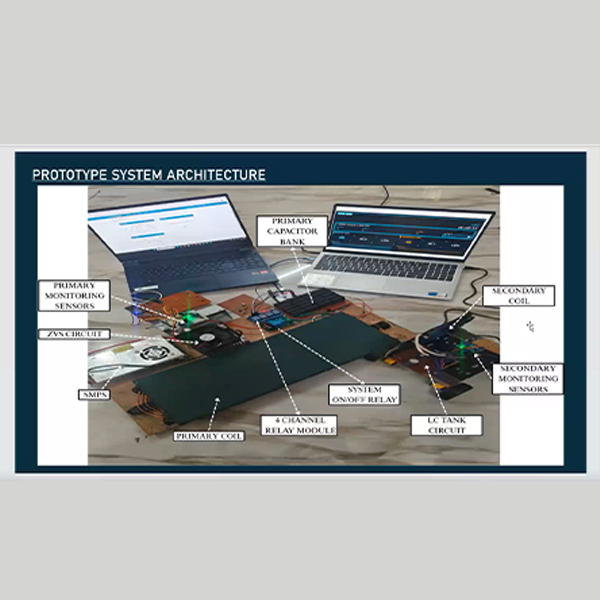
Problem statement: The rapid growth of electric vehicles (EVs) has created a strong demand for reliable and accessible charging infrastructure. Conventional wired charging systems suffer from several limitations such as physical connector wear, limited charging points, high installation costs, dependency on dedicated charging stations, and inconvenience during dynamic or roadside charging scenarios.
In urban environments, space constraints and civil work requirements further complicate the deployment of new charging stations. Additionally, existing wireless charging solutions face challenges such as uncontrolled power transfer, standby energy losses, safety risks, and lack of protection against unauthorized energy access.
There is a need for a secure, efficient, modular, and infrastructure-friendly EV charging solution that minimizes installation complexity while ensuring controlled and selective power delivery.
Solution: This project aims to solve the problem of range anxiety on electric vehicles through a dynamic charging system. approach uses a resonant coil transmitter & receiver to send energy to charge moving EVs on the road. designed a prototype with a wireless energy encryption system to reduce wireless energy for static conditions. Overall, project demonstrates a new way to charge moving EVs and reduce charging inconvenience.
Team Unified Logic
Read more
Team Unified Logic
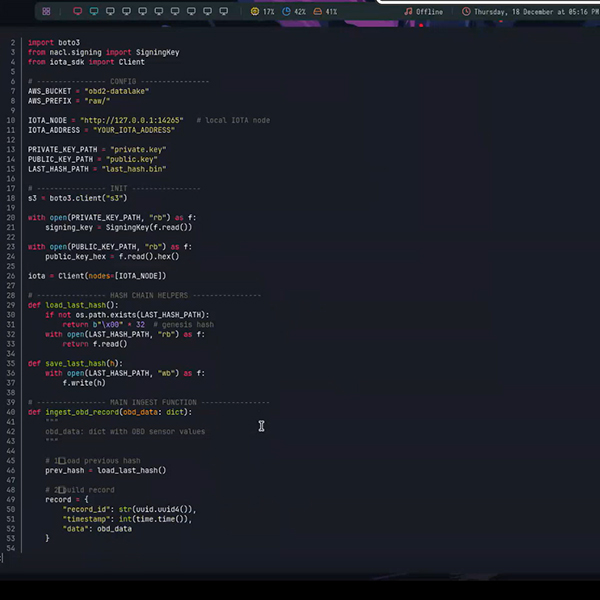
Problem statement: Modern automotive systems face increasing risks due to the lack of cryptographic authenticity and end‑to‑end data integrity. Odometer readings, service logs, and diagnostic data can be easily tampered with, resulting in resale fraud, warranty abuse, and insurance conflicts. In fleet operations, unreliable telemetry compromises analytics accuracy and driver behavior insights. Additionally, over‑the‑air (OTA) software updates pose critical safety and security threats when update packages are not strongly authenticated, integrity‑verified, and audit‑traceable. These vulnerabilities collectively undermine vehicle trust, safety, and operational reliability.
Solution: This project implements an end-to-end trusted vehicular telemetry pipeline that securely ingests OBD-II data at the Edge, verifies its integrity using cryptographic batching, and enables cloud-scale analytics without sacrificing data trust. Raw OBD telemetry is streamed from the vehicle to an edge device (Raspberry Pi), where records are deterministically hashed and grouped into fixed-size batches. Each batch is summarized using a Merkle tree, with per-record Merkle proofs stored off-chain and batch Merkle roots anchored to both a private edge ledger and a public Blockchain for immutability and global timestamping. This architecture ensures that every data point used for analytics or compliance can be independently verified against cryptographic anchors, providing strong guarantees of authenticity, non-repudiation, and tamper detection. On top of this trusted data layer, the system enables Edge-side machine learning for engine efficiency
Team EcoDrive Innovator
Read more
Team EcoDrive Innovator
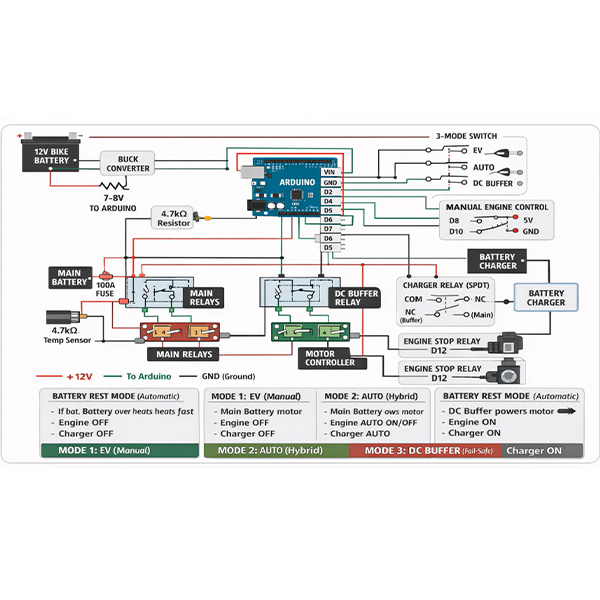
Problem statement: The adoption of Electric Vehicles (EVs) is constrained by limited driving range and rapid battery overheating during high‑load or hot weather conditions. These issues create range anxiety, reduce battery life, and compromise vehicle safety. Current cooling systems respond only after overheating begins, making them ineffective in real-world Indian climates. As a result, EV owners, fleet operators, and service providers face higher maintenance costs and reduced operational efficiency.
Solution: This project is a self-charging electric vehicle system that uses a small CNG-powered generator to charge the battery while driving. This reduces dependence on external charging stations and eliminates range limitations. The system is compact, cost-effective, and can be installed on existing EVs. It makes EVs more practical, especially in areas with limited charging infrastructure.